

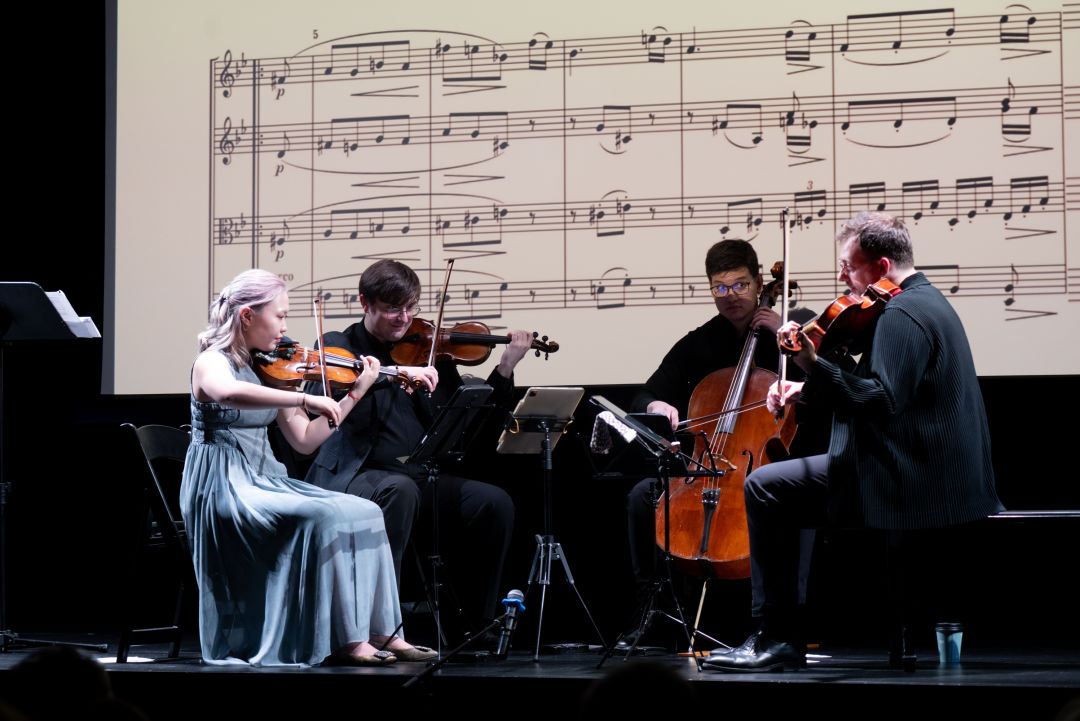
Last fall, when the Seattle Chamber Music Society was looking for somewhere to house its first-ever string quartet in residence, senior living facility Skyline stepped up to host. It may not seem the most natural fit for a group composed mostly of young millennials, but the retirement community has been a perfect landing pad for the renowned Balourdet Quartet.
“I think my favorite thing is if we’re waiting for each other out in the hallway or something and you run into people, and you have these little chats here and there, getting to just talk about life and talk about music and talk about everything with all of our neighbors,” says Russell Houston, the quartet’s cellist.
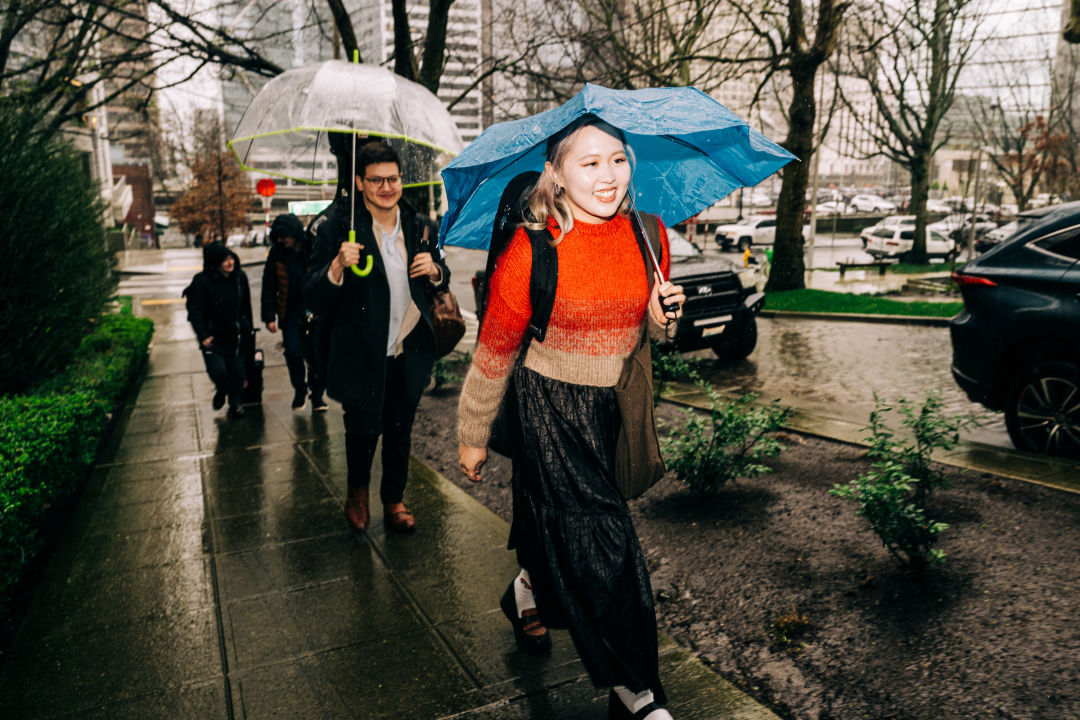
Members of the Balourdet Quartet take a rainy stroll from their temporary home at Skyline to the Memory Hub.
Residents have access to a couple of quartet events per month, including performances, open rehearsals, lectures, and master classes. “It’s been a wonderful boost for people here, because there’s a lot of interest in this community in music and the arts in general,” says Diane Stevens, a longtime Skyline resident and a board member of Seattle Chamber Music Society. “I’m telling residents here, ‘Hey, when they’re here, if you see them, invite them for dinner or just to get to know them, because they’re all wonderfully approachable.’”
At one recent concert, a resident tells me he’s had the opportunity to see the quartet several times and was particularly pleased to get a preview of the performance they went on to give at Carnegie Hall. For him, the ease of access to such an acclaimed group can’t be beat.
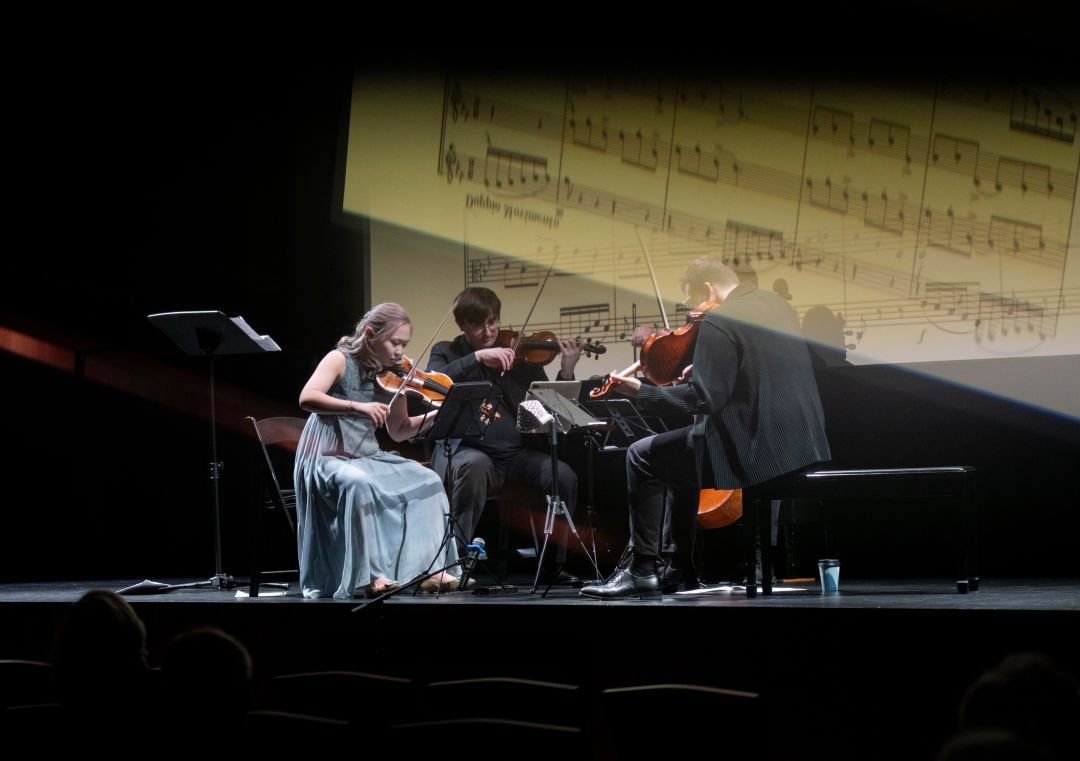
The Balourdet Quartet rehearsed a Carnegie Hall performance for Skyline residents recently.
While they’ve been in Seattle, the Balourdet Quartet has taken on a range of community events and educational initiatives, including one spearheaded by University of Washington nursing PhD student Sarah McKiddy. She’s teamed up with the Memory Hub, a “dementia-friendly community” that’s part of the UW Memory and Brain Wellness Center, to create music programming that engages people living with memory loss.
“We can use music in a really intentional way and also kind of build what we call cognitive reserve, or cognitive resilience,” she says. “We’re learning so much about how music activates many, many parts of the brain in ways that, let’s say, a drug or another kind of intervention cannot, so there’s a lot of promising evidence we have so far.”
As someone who grew up playing the violin, McKiddy had noticed that even people who could no longer remember basic details of their lives would perk up at the sound of a familiar song. “It would immediately spark either a smile or certain memories,” she says.
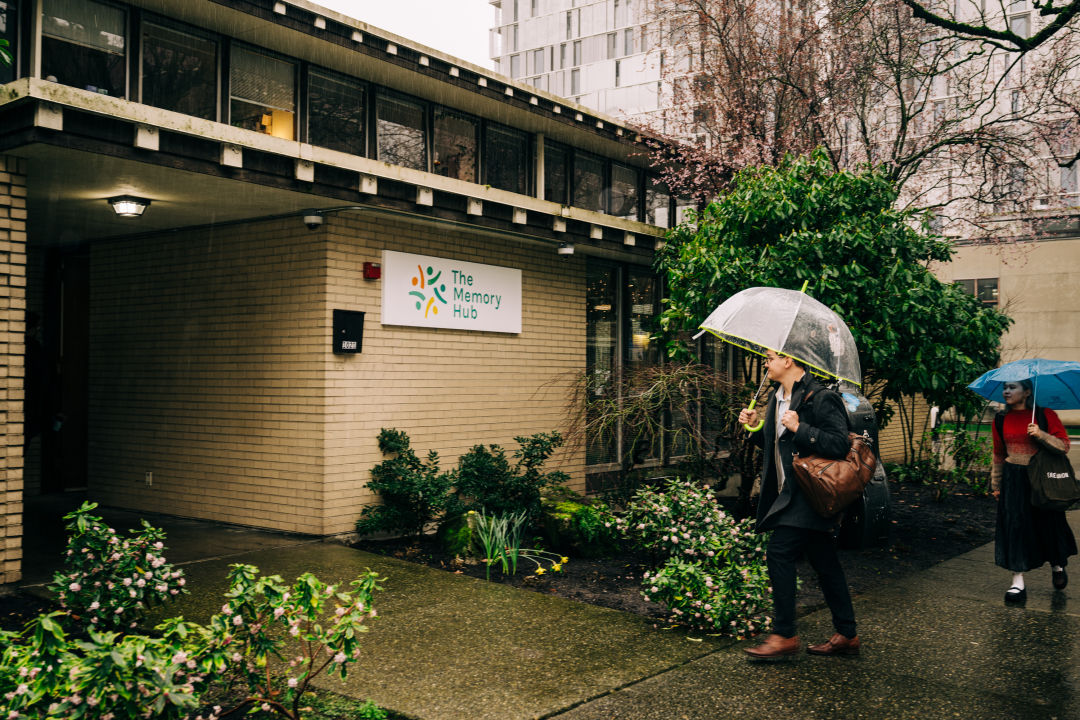
The Memory Hub on First Hill is part of UW's Memory and Brain Wellness Center.
For her dissertation, McKiddy wanted to look into the research behind music and memory, as well as establish some best practices for musicians and community organizations working with older adults. While there have been neuroscience-based studies on the topic, there’s less info out there on how to prep performers for their work and what is actually most helpful for the participants. She recruited the Balourdet Quartet to participate—which happened to be quite convenient, given that Skyline is just two blocks away from the Memory Hub on First Hill.
One of the programs McKiddy has piloted so far had the quartet choose three pieces to play accompanied by different works of art, while people from the adult day program Elderwise painted. Another program involved individuals from the Asian elder community Kin On doing a tai chi flow to music they had previously requested, performed live by the quartet. Recently, a physician who has training as a classical ballet dancer led a seated dance class set to music from the quartet.
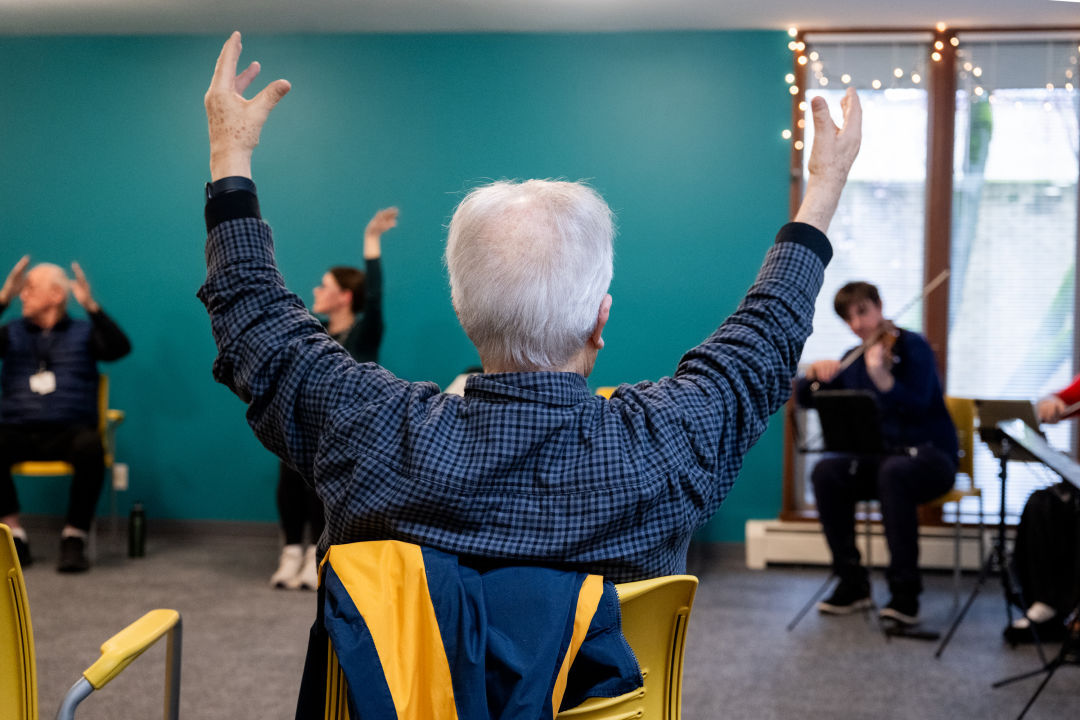
The Balourdet Quartet performing live for a seated dance class at the Memory Hub.
For the older adults participating, the chance to hear music live, with its reverb they can feel in their bodies, is often a real treat. One told McKiddy that although living with dementia can be terrifying, meeting people who can create genuine music wipes away some of the fear, even just for those few minutes that they’re listening.
As a musician herself, McKiddy says it was important to get buy-in from the Balourdet Quartet, so that they felt like active participants in the study. “We are part of the organizing, part of the thinking, which I really appreciate,” says Angela Bae, a violinist for the quartet. She enjoys the opportunity to think about presenting the music they already play in a variety of ways.
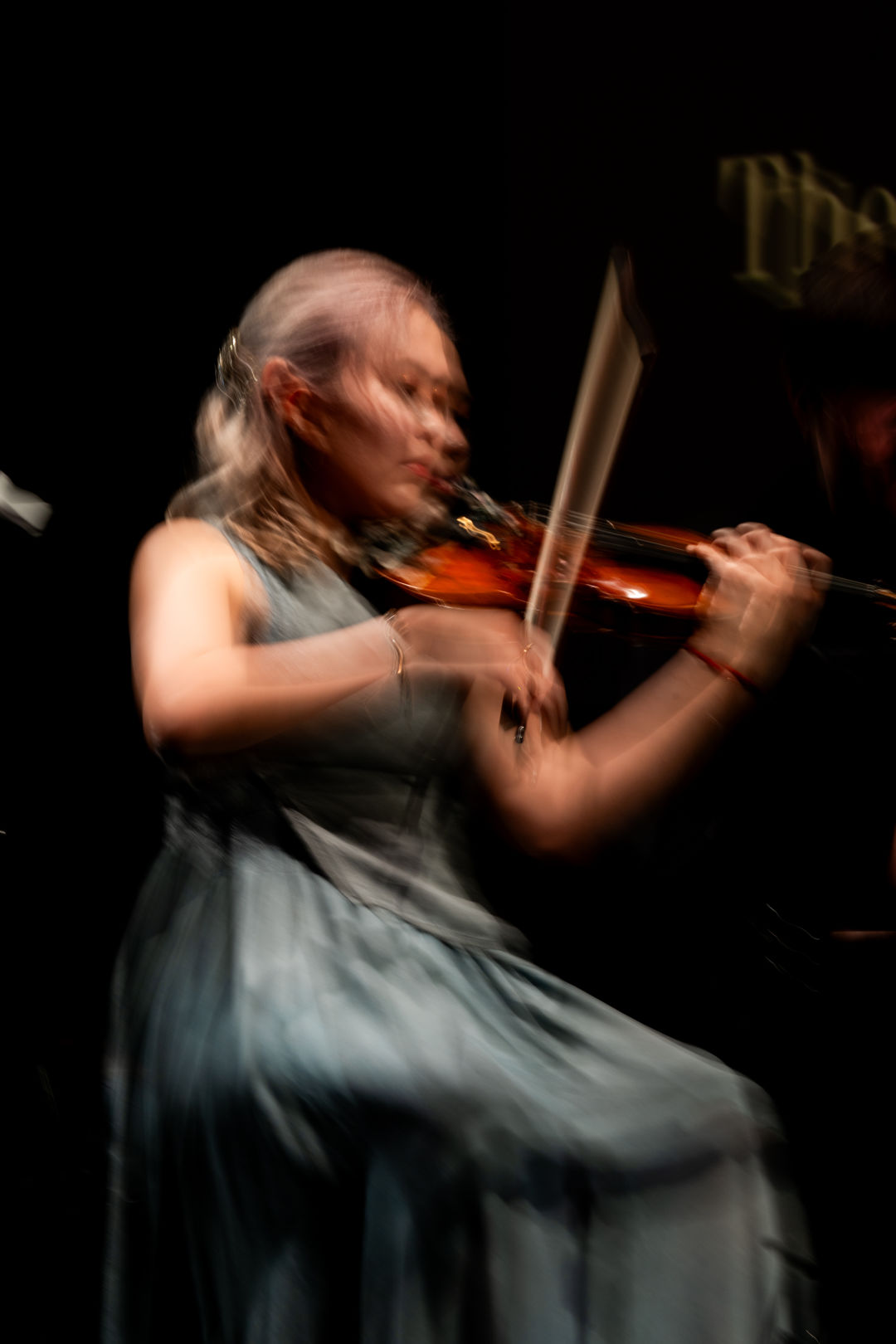
Violinist Angela Bae says performing in the community—and not just in concert halls—helps keep the Balourdet Quartet fresh and energized.
“It helps us on our tours, too, because it just keeps us fresh. Because sometimes when you play 10 concerts in a row, it can feel repetitive, but whenever we come back home, we have these [events],” she explains. “So we’re always preparing something. We’re always thinking differently, even if it’s a half-hour conversation to reorganize our brains for the next event. It keeps our creative brains really active, which I think at the end of the day benefits all of us as well as everybody who sees us.”
While the quartet members are no strangers to playing for audiences older than they are, given their genre, the ability to exchange ideas with people of all ages—whether in conversation at the Memory Hub or just passing in the halls at Skyline—is one they value. “Being able to live with the people who support [classical music] the most actively is really fun,” Bae says. “We know how much they appreciate it and being able to be so close.” (Though it did take a few weeks for everyone to stop wondering why they weren’t wearing visitor badges.)
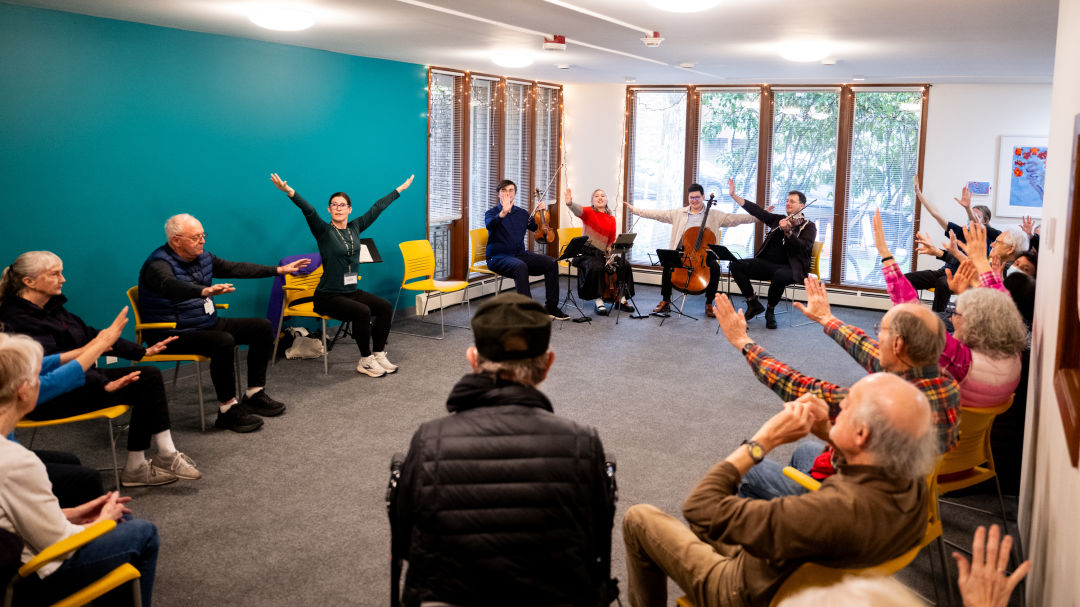
The quartet gets in on the dance portion of their recent performance at the Memory Hub.
“There are so many different ways that communities and our society as a whole are very fractured,” McKiddy says. “I think ageism seeps in in many corners, and I know that one potential antidote to ageism is more intergenerational relationships and ways to foster those. Music is one of those wonderful nonverbal ways to kind of explore together and put aside perceived differences.”
After the quartet finished a piece at a recent concert, a woman sitting next to me who arrived midperformance turned and gushed, “That was amazing. Do you know what it’s called?”
I thought for a moment. “I’ve forgotten,” I said. And though I couldn’t place its name, I delighted in its sounds—and the reactions of those around me—all the same.
Haley Shapley is the wellness columnist for Seattle Met. She’s the author of Strong Like Her: A Celebration of Rule Breakers, History Makers, and Unstoppable Athletes and the forthcoming Night Owl: Staying Up Late in a World Built for Early Birds.