

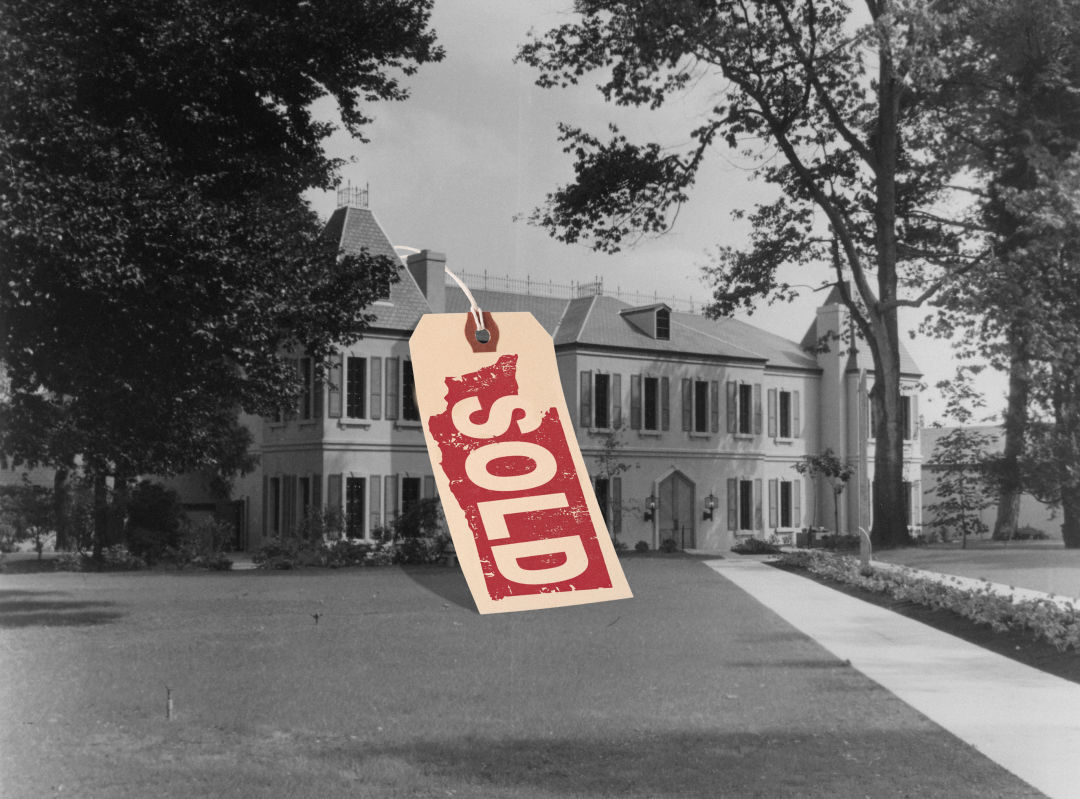
For the last 50-plus years, Washington’s largest and oldest winery has been owned by jumbo companies headquartered elsewhere. This month, that changed when Woodinville’s Chateau Ste. Michelle—known locally as the place to picnic at summer concerts—and its associated wineries were purchased by Yakima Valley’s Wyckoff family.
While Chateau Ste. Michelle’s lineage dates back to 1933, it hasn’t been locally owned since 1974. Long the world’s largest producer of Riesling, it makes a wide assortment of other wines and is the ninth-largest winery in the US.
The nature of Chateau Ste. Michelle’s ownership will change greatly with the move as it escapes the clutches of private equity and moves under the umbrella of a family-owned company. Since 2021, it has been owned by Sycamore Partners, a New York–based private equity firm that sold Ste. Michelle’s California wineries, laid off employees, and decreased production.
The goal was to right-size the company in a global wine market that has been in near-freefall due to a variety of factors, starting with decreased consumption, but also including generational changes, global oversupply, tariffs, labor, low- and no-alcohol movements, and distributor/retailer consolidation.
With its large share of the market, the Chateau, as local wine lovers call it, was left badly financially exposed: In 2020, its parent company announced nearly $400 million in losses.
Private equity companies are not known for the patience or long-term vision that the wine industry requires. Rather, they are built in relentless pursuit of ever-increasing profits, which always made Sycamore’s ownership an awkward fit for Ste. Michelle.
Washington’s wine industry has not been served well in recent years by nonlocal ownership. Numerous Washington wineries with outside owners (looking at you, California) have ended up adrift at sea or washed up on the vinous beach (see Hogue, Columbia, Tamarack, Owen Roe, Charles Smith, and others). Chateau Ste. Michelle could easily have suffered the same fate: Sycamore reportedly had offers from California wineries, which would have left it in a much less certain state. (Literally, as in potentially making Chateau Ste. Michelle’s wines in that state and using California’s glut of grapes.)
Given those options, the Wyckoffs’ ownership seems like a promising sign for Chateau Ste. Michelle, and Washington wine in general. “We look forward to working with the Ste. Michelle team to build on its leadership, invest in winemaking quality, and champion Washington’s wine grape growers and Washington wine to consumers across the country,” said Court Wyckoff, CEO of Wyckoff Farms and Coventry Vale Winery, in a statement.
What’s this Coventry Vale he’s involved with? Largely, it's a custom crush winery for Chateau Ste. Michelle—meaning they make wine for Chateau Ste. Michelle. The Wyckoff family owns multigenerational agribusinesses that date back to 1950 and have partnered with Ste. Michelle since the 1980s, as a grape grower and custom crush winery. Unlike Sycamore, the Wyckoffs appear to be in it for the long haul with the Chateau, not to make a quick buck. “It really enables us to start to make decisions much more for the long-term,” said Chateau Ste. Michelle co-CEO David Bowman.
That makes the future hopeful, if still uncertain. The Wyckoffs have never run a retail wine business, let alone a giant one that sends wine all over the world. The wine market continues to sled its way through various sources of upheaval, including cannabis legalization, the rise of mocktails, a growing neo-prohibitionist movement, and more. The fate of the Chateau’s 118-acre Woodinville property—and local concert venue—where Sycamore planned to develop a hotel, restaurants, retail, and a large amount of housing, also still hangs in the balance.
But succeed or fail, whatever happens next to Washington’s founding winery will happen by its own hand, or at least by locally owned ones. To that, we should all raise a glass—of Chateau Ste. Michelle wine, naturally.