


Casariyo, or afternoon tea, snacks from Soomaaliya.
After Ifrah Ahmed arrived as a child in Seattle from Mogadishu in 1996, she found comfort and community at a Somali restaurant in Tukwila called Marwa. “Having a restaurant like Marwa in our new city signified that we could perhaps belong,” the food writer and recipe developer writes in her cookbook, Soomaaliya, out March 24.
Ahmed lays out the history of a culinary culture built on milk and meat, seasoned with
spices acquired by trade with Asia, and infiltrated by colonial forces. She profiles camel milk entrepreneurs in California, depicts Somalia itself in the seeds of xawaash, the cumin- and coriander-based mix at the heart of the cuisine, and gives recipes for cardamom-scented crepes, braised lamb, and Somali lasagna. Soomaaliya is a love letter from a daughter of the diaspora and a portrait of a cuisine with slim written records.
Though Ahmed’s family settled in Seattle’s first big wave of Somali refugees, she grew up immersed in the Somali community. “That support system from the community and the ability to build this den of Somali life was pretty beautiful,” she says. With the book, she hopes to pass on what she learned from that experience. “I want future generations to have an understanding, and to have access to the documentation of their culture and their culinary heritage.”
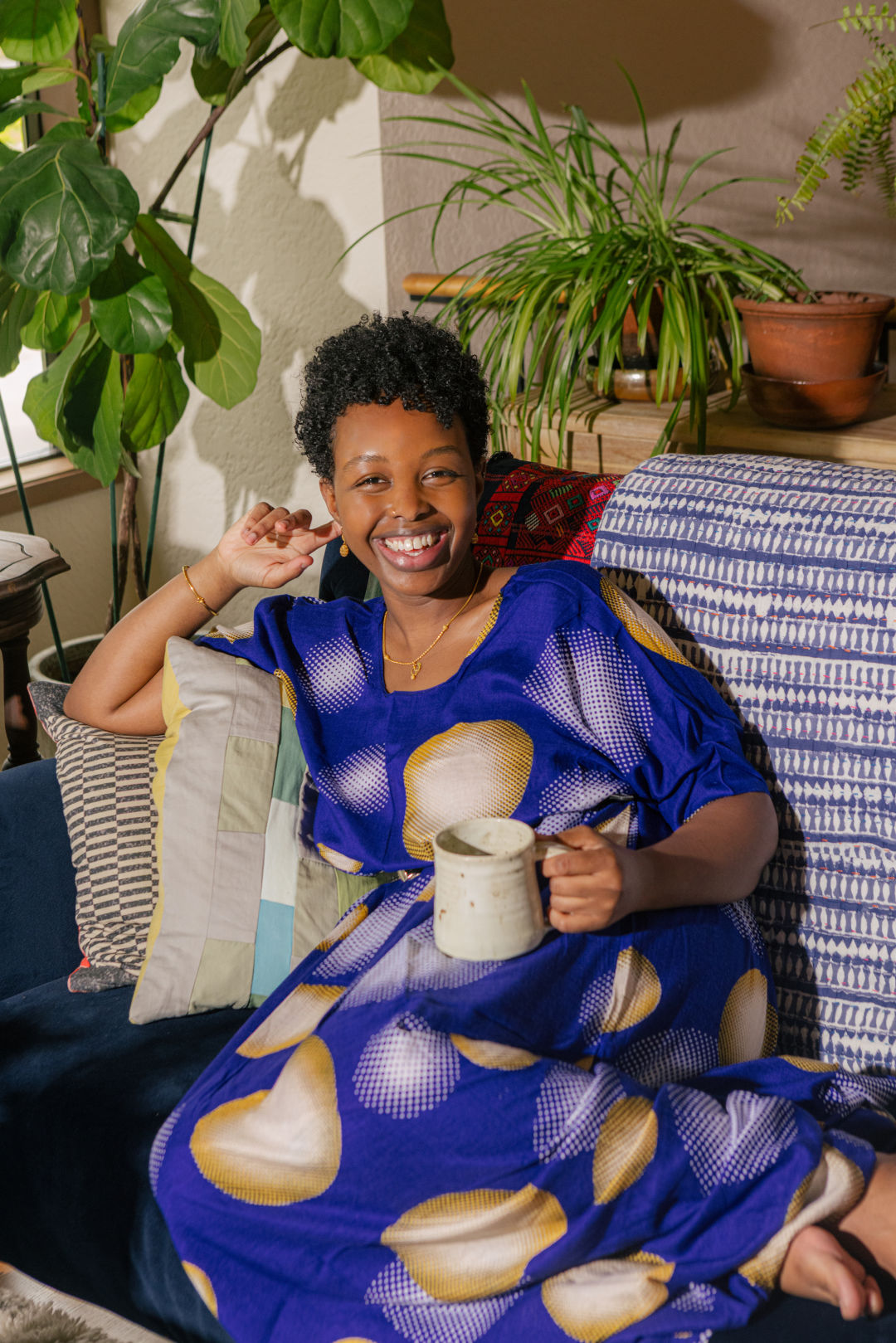
Soomaaliya author Ifrah Ahmed grew up in the Seattle area’s thriving Somali community.
Much of that community, her family found at Marwa. “It was the place that we went for special celebrations, it was the place that we went just to go get tea or to get mango juice, which I really loved,” she says. On Fridays, her family would get food at Marwa, then rent movies from the nearby Blockbuster, a routine that symbolized their new American life. Other times, they were shopping for ingredients at the grocery store next door, or clothing at another shop in the same complex. “That was the hub of Somali life in Seattle. That’s really where our community started, and obviously it grew exponentially from there.”
With the allegations against Somali businesses and the violence and abductions by ICE happening in Minnesota, across America, and in Seattle, Ahmed hopes that folks in Seattle realize “what an amazing and large Somali community” has been here since the early to mid-1990s. And that people stand in solidarity with and protect their Somali neighbors. “Either way, we’re a very proud, proud people with nothing to prove and we don’t fear anyone. So regardless of what happens, we’re always going to protect one another,” she says. “However, it would be amazing if the larger Seattle community was a part of that as well and extended their solidarity. Because we are a part of this community—and a part of this country—and we’re not going anywhere.”
Today, estimates put the Somali population of the Seattle area at around 30,000, a diaspora community that has created its own tidbits of culture. “Salmon sambuus are really the symbol of Seattle Somalis, the culinary merging,” says Ahmed. She calls the triangular fried dumpling a cousin of the Indian samosa, and has the traditional beef version in the book. Personally, though, she prefers the lighter, flakier salmon. It was one of her mother’s specialties and is something she puts on the menu of her pop-up dinners. “It’s so representative of Seattle being my hometown, and having a very distinctly Somali experience in Seattle, which is obviously so different from a Somali person in Sweden or the UK or Australia,” she says. “To me, this is what it means having grown up in Seattle as a Somali person.”
But it’s still not something very well known outside of the local Somali community. When Ahmed teaches classes at the Pantry she finds that people here know little about the cuisine, or even that there is such a large community here. “Somali food is so varying and diverse, and I think they just don’t really understand all that’s going on, all the different components.”
Outsiders eating at Somali restaurants wonder why there is spaghetti on the menu, or, like a Los Angeles Times food writer who got mercilessly mocked on Twitter for doing so, question the banana served with their meal. (“It goes with the food. You get the banana and the hot sauce and the meat and the rice, all in one bite, and it balances everything out,” Ahmed says.) She blames a lack of education about what Somali cuisine is and, as she aims to explain in Soomaaliya, why it’s that way.
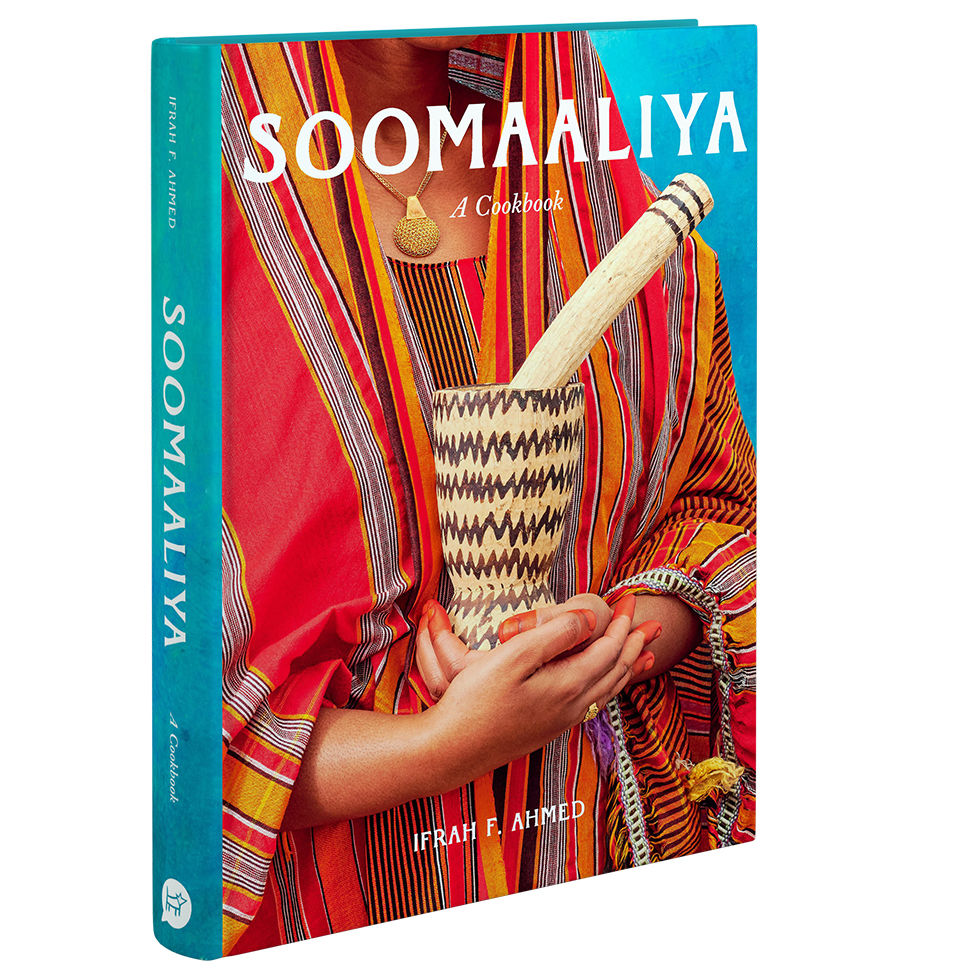
Ifrah Ahmed will speak about Soomaaliya on April 13 at Book Larder and host a dinner based on it at the Pantry on April 14.
Social media helps, giving people information about the food and offering a little preview of what it’s like inside a Somali restaurant. “People are now doing reviews of the food, and you didn’t really have that prior to the TikTok age,” she says. Restaurant and café owners from Ahmed’s generation, who arrived from Somalia as children, or those who were born here are also putting their own spins on the cuisine they grew up with, cooking their own interpretations of Somali cuisine. “It’s interesting to see how the cuisine has been shifting and adapting and changing,” says Ahmed.
She points to a food truck she loves, Taste of Somalia, as an example, and SeaTac coffee shop Five Star Espresso, which also serves Somali snacks, like fish sambuus and bur, a fried beignet for which she has a recipe in Soomaaliya.
“We’re entering an era in which there is, for better or worse, a lot of attention on Somali people,” Ahmed says. With the popularity of Ethiopian food and the growing popularity of Yemeni coffee shops, she sees an opportunity for Somali restaurants and cafés: “They’re in a unique position to hit that next wave.”
In the 30 years since her family arrived in the Seattle area, Ahmed watched the Somali community become more established, even electing Somali political leaders, like Port of Seattle commissioner Hamdi Mohamed, with whom she grew up. “It’s like we’ve really become a part of the fabric of Seattle society,” says Ahmed. “It’s interesting to continue to watch that develop, and I hope food continues to be kind of a big part of that.”

Xawaash
(Somali spice mix)
It’s no exaggeration to say that xawaash is at the heart of Somali cuisine. It is Somali history on a plate—a culinary reminder of Somalia’s centuries of global trade, particularly along the Indian Ocean. Xawaash is what makes many Somali dishes taste distinctly Somali. While every household’s xawaash recipe is its own, typically seven core spices—cumin, coriander, black pepper, cinnamon, cardamom, cloves, and turmeric—are toasted until their fragrance blooms, then blended into an earthy golden-brown powder. Xawaash stores very well and for a long time in an airtight container, though it’s at its peak shortly after it’s made. If you use it often (and many recipes in this book call for it), you can double or triple the recipe for a big batch.
Ingredients
Makes about 2 1/2 cups
- 1 cup whole cumin seeds
- 1 cup whole coriander seeds
- 1/4 cup black peppercorns
- 1 small to medium piece of cinnamon bark
- 2 tbsp green cardamom pods
- 1 1/2 tsp whole cloves
- 1/4 cup ground turmeric
Steps
- Toast the cumin, coriander, peppercorns, cinnamon bark, cardamom pods, and cloves in a medium skillet over medium heat, stirring constantly so the spices don’t burn. The spices are toasted when they have a slightly darker color and become
fragrant, 1 to 2 minutes. - Transfer the toasted spices to a blender or spice grinder and blend until they become a fine powder. Transfer to a bowl and mix in the ground turmeric until it’s fully incorporated and the spice mix is golden brown. Allow to cool completely, then store in an airtight container.
Excerpted with permission from Soomaaliya by Ifrah F. Ahmed, published by Hardie Grant North America, March 2026