


Dog Mountain's spring wildflowers are so popular that they require a permit.
our mountains and waterways are Washington's mainstays of recreation, but the wildflowers are a fleeting treat. They appear seasonally but never always predictably. Follow these trails to some of the most popular off-the-beaten-path displays—but other famous flowers are accessible by car, like the Skagit Valley Tulip Festival and University of Washington's cherry trees.
As with any hiking outing, we recommend first checking out current resources from the nonprofit Washington Trails Association, which catalogues directions and recent condition reports. The Pacific Northwest Wildflower Bloom Map is useful for current status across Washington and Oregon. And since wildflowers are as delicate as they are photogenic, always stay on trail.
Mount Dickerman
Mountain Loop Highway
At one time this corner of the forest east of Granite Falls was busy with mining activity, but now it's a treasure trove of trailheads and river access points. A strenuous climb up almost 4,000 feet over four miles (each way) leads to a scenic mountaintop; in mid-July the open ridge lines burst into bloom. Even when the petals drop, it's worth a visit: By fall these slopes are dotted with wild blueberries and their fire-red bushes.
Crawford Ranch Trail
Columbia River Gorge
A hot spot for lupine and balsamroot in early June, the Columbia River Gorge's rolling hills are also home to phlox and countless other blooms. Several trails within the Columbia Hills Historical State Park reach these expanses of color, the river and the blocky Horsethief Butte visible downhill. This one, though, welcomes leashed dogs and remains short and flat enough for the youngest of hikers.
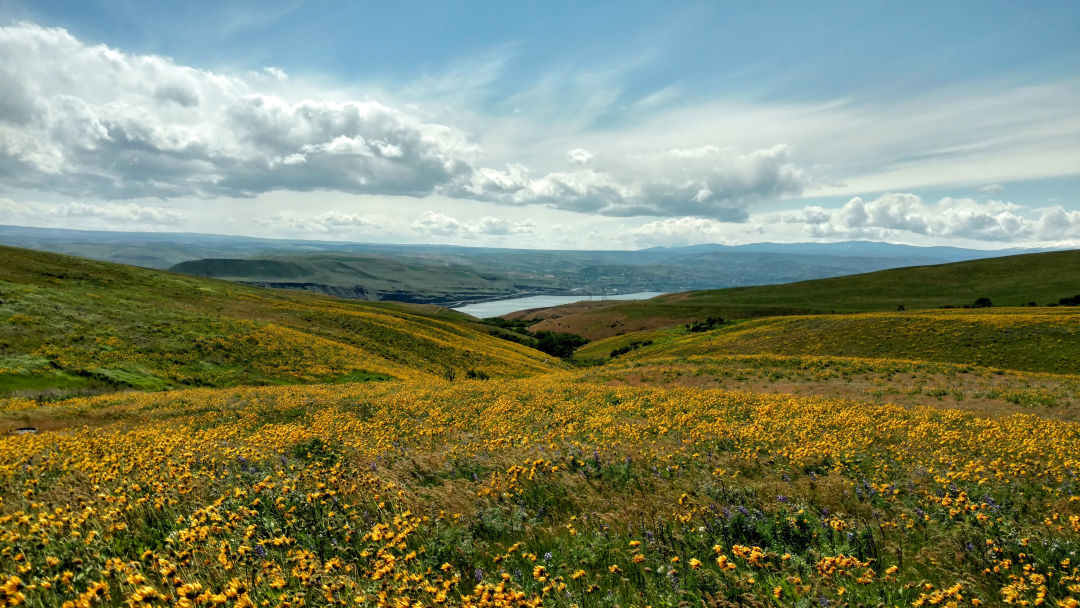
Yellow balsamroot coats the rolling hills of Dalles Mountain Ranch, accessed from the same trailhead.
Dog Mountain
Columbia river gorge
Also perched above the Columbia River is a wildflower hike so popular that even setting foot on its trail requires an advance permit on weekends and Memorial Day. Dog Mountain, renowned for its veritable carpet of wildflowers, does afford panoramic views—including Oregon's Mount Hood—and all the wildflowers your heart desires.
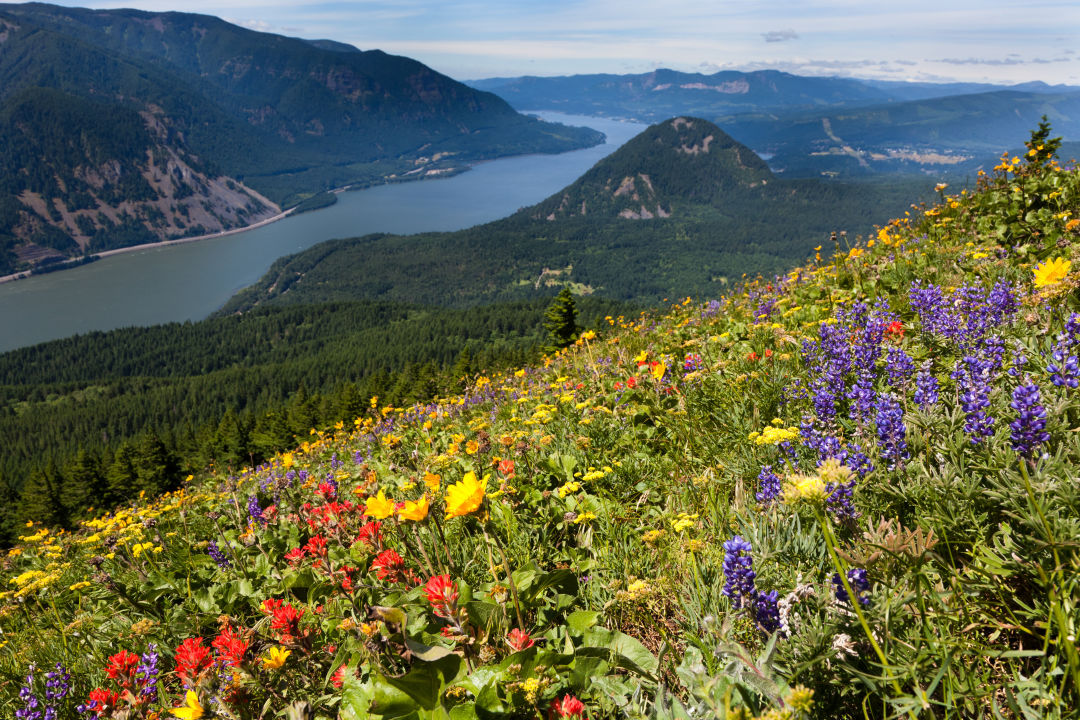
The slopes of Dog Mountain pop with color every spring.
Klahane Ridge Trail
Olympic National Park
Despite its name, this part of the Olympics gets positively placid in summer when its meadows finally shake their winter coat and go into bloom. Look for glacier lilies on the five-mile Klahane Ridge Trail's switchbacks; the drooping white flowers are the first to show up after the snows melt. Trails that depart Hurricane Ridge proper, a few miles ahead where the visitor center was once located, are shorter and flatter. Some (like Hurricane Hill) are even paved for more accessible—yet still steep—hiking.
Yellow Aster Butte
Mount Baker
There's some truth in advertising: This alpine route near the Mount Baker Ski Area is plenty yellow in late spring and early summer, but the color is courtesy of fields of daisies sprawling above shimmering pocket lakes. Come fall, the palate continues its boastful show of color with deep auburns, browns, oranges, and purples painting the hillside. Despite non-trivial elevation gain, the area is incredibly popular among hikers and campers—but some of the prettiest colors come at the very start of the 7.5-mile trail.
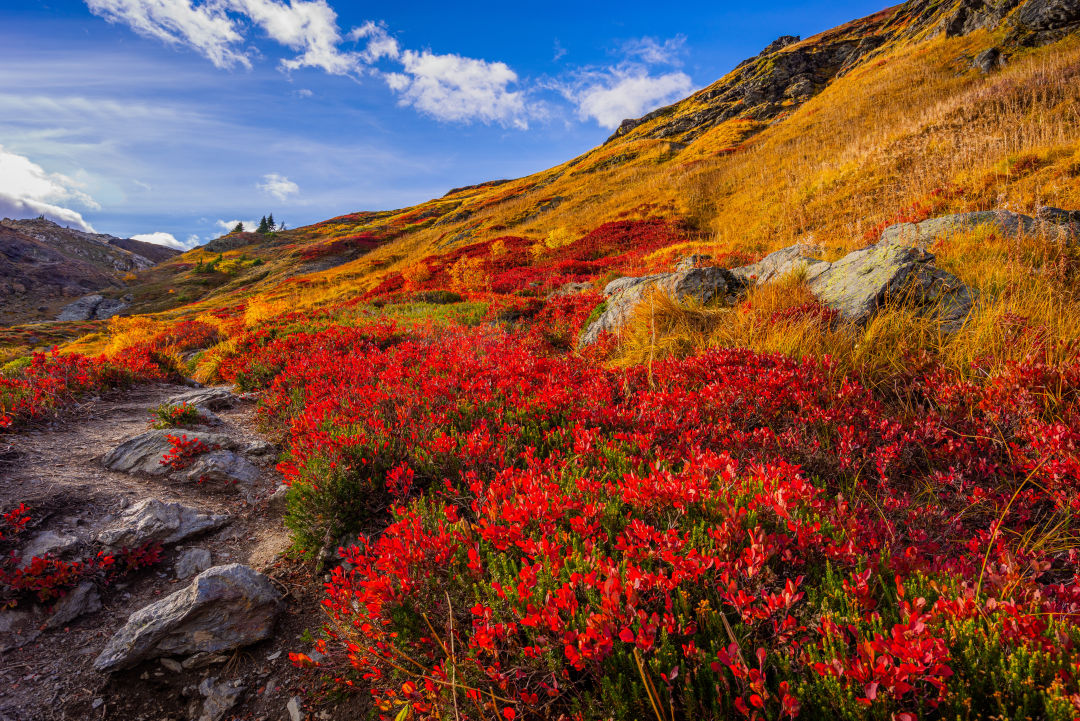
Yellow Aster Butte: the pumpkin spice latte of Northwest hikes.
Skyline Loop
mount rainier national park